Karakol: A Garrison Town Under the Peaks
A Russian-built grid town below the Tian Shan, with a nail-free mosque and a Sunday market that still runs on livestock, not souvenirs.
The Silk Route Desk · September 21, 2026 · 2 min read
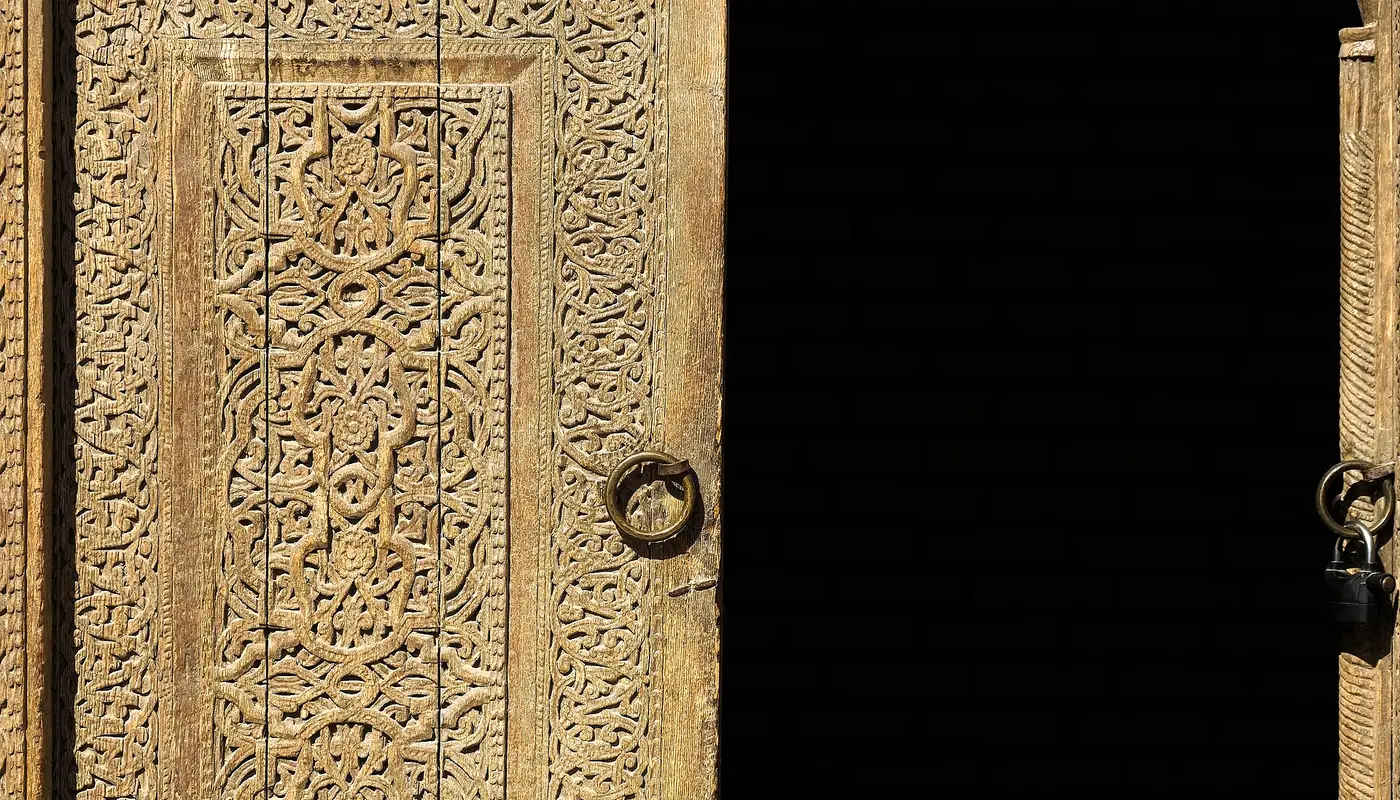
Karakol was laid out by the Russian military in the nineteenth century as a garrison town on the empire’s eastern edge, and it still reads that way. Wide grid streets, timber houses with carved shutters, a Russian Orthodox cathedral standing where a parade ground might have been. Most Central Asian cities that survive from this period got swallowed by later development. Karakol didn’t, largely because it never became important enough to bother demolishing.
A mosque built without nails
The reason to come is the Dungan mosque. It was built by Chinese Muslim refugees — the Dungan — who fled into Russian territory after a failed rebellion against Qing rule in the late nineteenth century and settled here with nothing. The mosque they raised is timber, carved with dragons and lotus flowers that have no business being on a mosque and are exactly why it’s worth seeing, and it was built, as the story goes and as the joints suggest, without a single nail. It’s a small building. You can see all of it in twenty minutes. That’s not a complaint — Karakol doesn’t ask for more than an afternoon of your attention for its sights, and gives it back with something genuinely unlike anything else on the Silk Road circuit.
The cathedral, a few streets over, does the same trick in reverse: an Orthodox church built entirely in wood, no stone at all, because stone wasn’t practical this far out and this far up.
The Sunday market
Go for the animal market if you can arrange your trip around it. It starts early, well before most tourists are awake, and it is not staged for tourists at all — herders bring in sheep, cattle and horses to trade, deals are struck by handshake and a look, and the whole thing has the unhurried, slightly chaotic logic of something that predates the idea of a tourist attraction. It’s loud, it smells exactly like a livestock market, and if that’s not for you, know that going in.
Who it’s for, and the honest caveat
Karakol works for travellers heading into the Tian Shan — it’s the obvious base for the Karakol valley and Jeti-Oguz, and most people passing through are here for one night either side of a trek. As a city in its own right it’s thinner than the “three days” this category usually promises. The grid is walkable, the two buildings are excellent, but the town itself goes quiet fast, and a third day here without a trip out to the mountains would be a stretch. Come for the mosque, the market and the mountains behind it, not for Karakol as a destination in isolation. As with everywhere in this region, market days and access to the valley trailheads can shift with the season — we checked this ahead of publication and would check again before booking.
Newsletter
Your escape plan — Central Asia
Get The Silk Route in your inbox. No spam, and one click to leave.
Twice a month · Unsubscribe any time. We never sell or rent your address; read the privacy policy.